Two Traditions, One Marathi Soul
Wari and Tamasha — a pilgrimage of unity and a folk art of truth-telling — together shaped the cultural consciousness of Maharashtra.
Wari
For over 800 years, thousands of Warkaris — devotees of Lord Vitthal — make the sacred journey to Pandharpur. This tradition surpasses barriers of caste, religion, language and sect, uniting the Marathi people in a unique expression of devotion and equality.
See Wari Photo ArchiveTamasha
An unparalleled cultural tradition of folk art — for a millennium, Tamasha has conserved expressions of music, drama, acting, literature and poetry. It has nurtured the life values and social consciousness of the Marathi multitude, reflecting society's deepest truths.
See Tamasha Photo ArchiveA Living Installation at Chinchani
Shabd Shilpa — Word-Sculpture of Vitthal
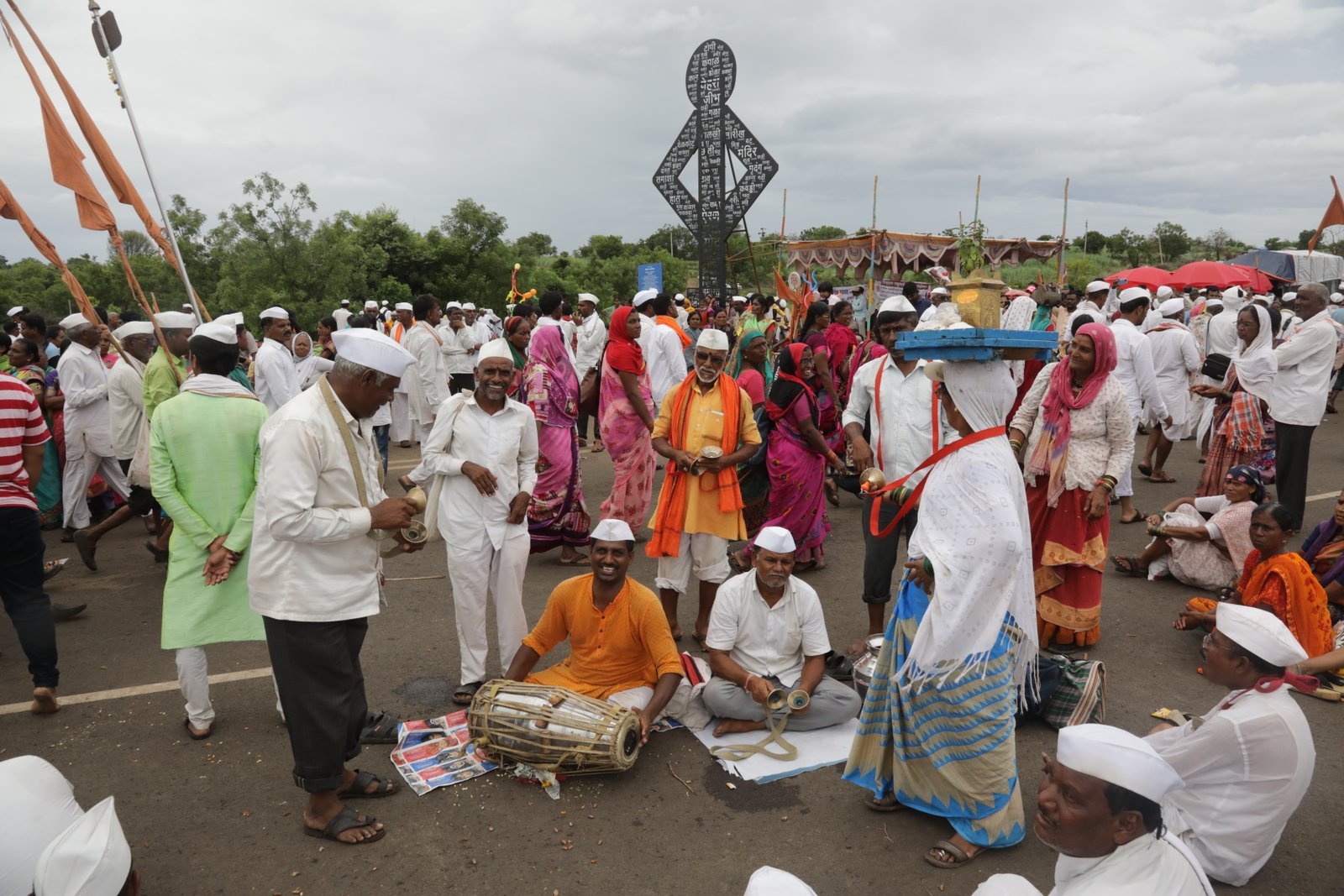
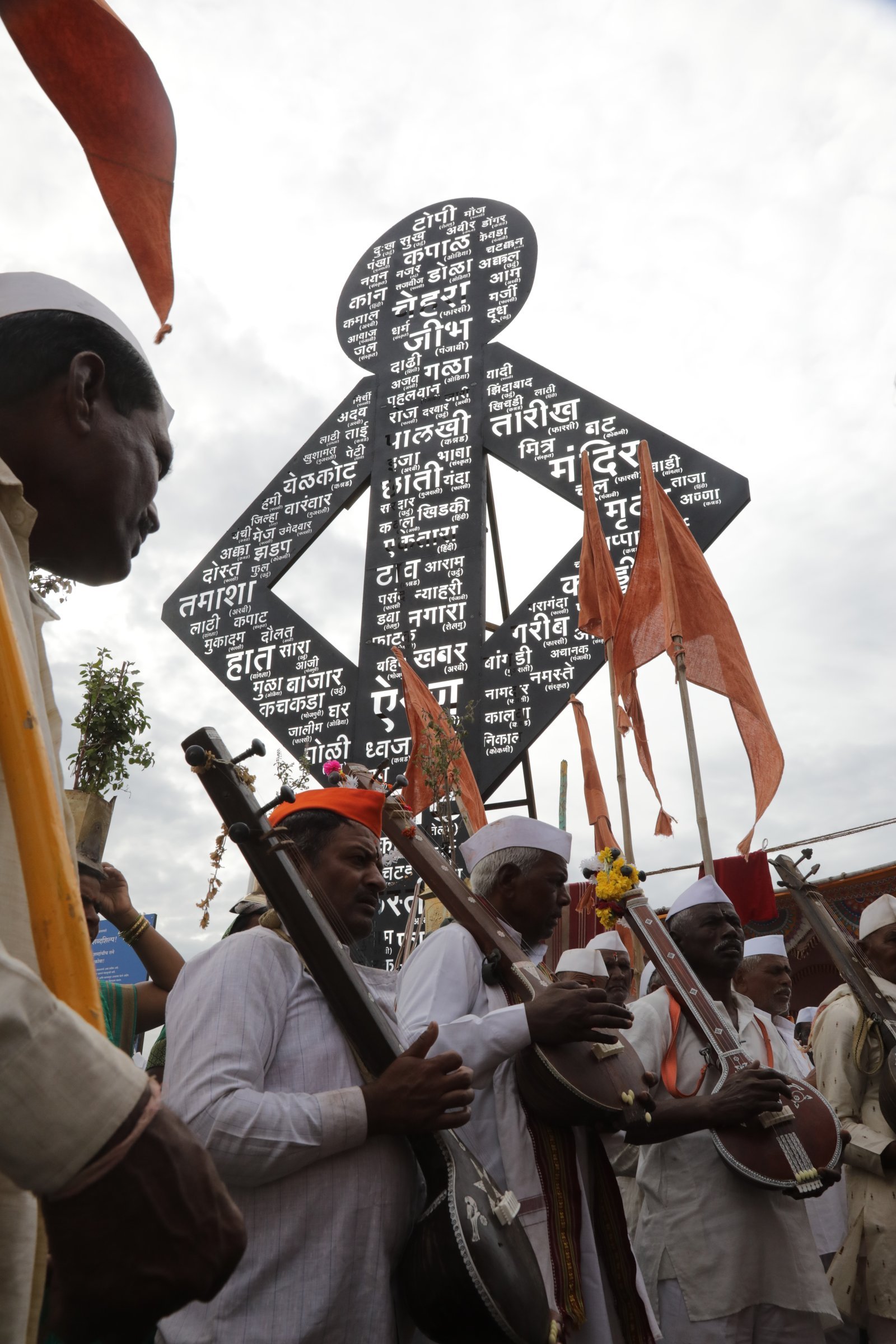
At the entrance to Chinchani, Kuroli (Pirachi) — 16 km from Pandharpur on the Wari route — stands a 20–24 foot steel sculpture of Vitthal unlike any other: it is built entirely out of words. Every letter and syllable of the figure is formed from words the Marathi language has absorbed over centuries from Telugu, Kannada, Kashmiri, Farsi, Urdu, Arabic, Bhojpuri, Tamil, Gujarati, Hindi and Sanskrit — a physical monument to Marathi as a living, absorptive, plural language.
The sculpture was conceptualised by Sandesh Bhandare and built by artists Jitendra Kalaskar, Ulhas Kagade, Pravin Gaikwad and Sachin Nimbalkar, with language scholars contributing terms from each of the source languages. It was inaugurated on Saturday, July 2, 2022, by senior Marathi litterateur Vasant Aabaji Dahake.
"A rural art installation emerges as a critique of nationalism with its embracing of pluralism." — G. N. Devy, The Hindu – Frontline, July 10, 2022
Solapur District, Maharashtra
Chinchani — Where the Gallery Stands
Nestled on the sacred Wari route, 16 km before Pandharpur, the village of Chinchani is the chosen home of the Atmabhan gallery. A resettlement village of dam-affected people from Kanher (Satara), Chinchani has distinguished itself through sustainable, community-led development.
The villagers and traditional Warkaris generously donated land from their communal holdings — a profound act of faith in this project of cultural preservation.